Deprecated: wpml_sticky_post_sync(): Implicitly marking parameter $sitepress as nullable is deprecated, the explicit nullable type must be used instead in /home/nvpzkhc/testwww/wp-content/plugins/sitepress-multilingual-cms/inc/functions.php on line 820

Deprecated: WPML\Container\make(): Implicitly marking parameter $args as nullable is deprecated, the explicit nullable type must be used instead in /home/nvpzkhc/testwww/wp-content/plugins/sitepress-multilingual-cms/classes/container/functions.php on line 26

Deprecated: WPML\Collect\Support\Arr::first(): Implicitly marking parameter $callback as nullable is deprecated, the explicit nullable type must be used instead in /home/nvpzkhc/testwww/wp-content/plugins/sitepress-multilingual-cms/vendor/wpml/collect/src/Illuminate/Support/Arr.php on line 134

Deprecated: WPML\Collect\Support\Arr::last(): Implicitly marking parameter $callback as nullable is deprecated, the explicit nullable type must be used instead in /home/nvpzkhc/testwww/wp-content/plugins/sitepress-multilingual-cms/vendor/wpml/collect/src/Illuminate/Support/Arr.php on line 163

Deprecated: WPML\Auryn\Injector::__construct(): Implicitly marking parameter $reflector as nullable is deprecated, the explicit nullable type must be used instead in /home/nvpzkhc/testwww/wp-content/plugins/sitepress-multilingual-cms/vendor/otgs/auryn/lib/Injector.php on line 51

Deprecated: WPML\Auryn\Injector::provisionFuncArgs(): Implicitly marking parameter $reflParams as nullable is deprecated, the explicit nullable type must be used instead in /home/nvpzkhc/testwww/wp-content/plugins/sitepress-multilingual-cms/vendor/otgs/auryn/lib/Injector.php on line 447

Deprecated: WPML\Auryn\CachingReflector::__construct(): Implicitly marking parameter $reflector as nullable is deprecated, the explicit nullable type must be used instead in /home/nvpzkhc/testwww/wp-content/plugins/sitepress-multilingual-cms/vendor/otgs/auryn/lib/CachingReflector.php on line 16

Deprecated: WPML\Auryn\CachingReflector::__construct(): Implicitly marking parameter $cache as nullable is deprecated, the explicit nullable type must be used instead in /home/nvpzkhc/testwww/wp-content/plugins/sitepress-multilingual-cms/vendor/otgs/auryn/lib/CachingReflector.php on line 16

Deprecated: WPML_Resolve_Object_Url_Helper::__construct(): Implicitly marking parameter $sitepress as nullable is deprecated, the explicit nullable type must be used instead in /home/nvpzkhc/testwww/wp-content/plugins/sitepress-multilingual-cms/classes/url-handling/resolver/class-wpml-resolve-object-url-helper.php on line 37

Deprecated: WPML_Resolve_Object_Url_Helper::__construct(): Implicitly marking parameter $wp_query as nullable is deprecated, the explicit nullable type must be used instead in /home/nvpzkhc/testwww/wp-content/plugins/sitepress-multilingual-cms/classes/url-handling/resolver/class-wpml-resolve-object-url-helper.php on line 37

Deprecated: WPML_Resolve_Object_Url_Helper::__construct(): Implicitly marking parameter $wpml_term_translations as nullable is deprecated, the explicit nullable type must be used instead in /home/nvpzkhc/testwww/wp-content/plugins/sitepress-multilingual-cms/classes/url-handling/resolver/class-wpml-resolve-object-url-helper.php on line 37

Deprecated: WPML_Resolve_Object_Url_Helper::__construct(): Implicitly marking parameter $wpml_post_translations as nullable is deprecated, the explicit nullable type must be used instead in /home/nvpzkhc/testwww/wp-content/plugins/sitepress-multilingual-cms/classes/url-handling/resolver/class-wpml-resolve-object-url-helper.php on line 37

Deprecated: WPML_URL_Converter_Url_Helper::__construct(): Implicitly marking parameter $wpdb as nullable is deprecated, the explicit nullable type must be used instead in /home/nvpzkhc/testwww/wp-content/plugins/sitepress-multilingual-cms/classes/url-handling/converter/helper/class-wpml-url-converter-url-helper.php on line 24

Deprecated: WPML_URL_Converter_Url_Helper::__construct(): Implicitly marking parameter $wpml_include_url_filter as nullable is deprecated, the explicit nullable type must be used instead in /home/nvpzkhc/testwww/wp-content/plugins/sitepress-multilingual-cms/classes/url-handling/converter/helper/class-wpml-url-converter-url-helper.php on line 24

Deprecated: WPML\Collect\Support\Collection::filter(): Implicitly marking parameter $callback as nullable is deprecated, the explicit nullable type must be used instead in /home/nvpzkhc/testwww/wp-content/plugins/sitepress-multilingual-cms/vendor/wpml/collect/src/Illuminate/Support/Collection.php on line 279

Deprecated: WPML\Collect\Support\Collection::first(): Implicitly marking parameter $callback as nullable is deprecated, the explicit nullable type must be used instead in /home/nvpzkhc/testwww/wp-content/plugins/sitepress-multilingual-cms/vendor/wpml/collect/src/Illuminate/Support/Collection.php on line 384

Deprecated: WPML\Collect\Support\Collection::last(): Implicitly marking parameter $callback as nullable is deprecated, the explicit nullable type must be used instead in /home/nvpzkhc/testwww/wp-content/plugins/sitepress-multilingual-cms/vendor/wpml/collect/src/Illuminate/Support/Collection.php on line 576

Deprecated: WPML\Collect\Support\Collection::sort(): Implicitly marking parameter $callback as nullable is deprecated, the explicit nullable type must be used instead in /home/nvpzkhc/testwww/wp-content/plugins/sitepress-multilingual-cms/vendor/wpml/collect/src/Illuminate/Support/Collection.php on line 995

Deprecated: WPML_Config_Update_Integrator::__construct(): Implicitly marking parameter $worker as nullable is deprecated, the explicit nullable type must be used instead in /home/nvpzkhc/testwww/wp-content/plugins/sitepress-multilingual-cms/classes/class-wpml-config-update-integrator.php on line 13

Deprecated: WPML_Absolute_To_Permalinks::__construct(): Implicitly marking parameter $auto_adjust_ids as nullable is deprecated, the explicit nullable type must be used instead in /home/nvpzkhc/testwww/wp-content/plugins/sitepress-multilingual-cms/classes/url-handling/class-wpml-absolute-to-permalinks.php on line 16

Deprecated: WPML\Utils\AutoAdjustIds::__construct(): Implicitly marking parameter $wp as nullable is deprecated, the explicit nullable type must be used instead in /home/nvpzkhc/testwww/wp-content/plugins/sitepress-multilingual-cms/classes/utilities/AutoAdjustIds.php on line 22

Deprecated: WPML_Translation_Element_Factory::__construct(): Implicitly marking parameter $wpml_cache as nullable is deprecated, the explicit nullable type must be used instead in /home/nvpzkhc/testwww/wp-content/plugins/sitepress-multilingual-cms/classes/translations/class-wpml-translation-element-factory.php on line 18

Deprecated: TranslationManagement::__construct(): Implicitly marking parameter $wpml_cookie as nullable is deprecated, the explicit nullable type must be used instead in /home/nvpzkhc/testwww/wp-content/plugins/sitepress-multilingual-cms/inc/translation-management/translation-management.class.php on line 85

Deprecated: WPML_Post_Status_Display_Factory::__construct(): Implicitly marking parameter $sitepress as nullable is deprecated, the explicit nullable type must be used instead in /home/nvpzkhc/testwww/wp-content/plugins/sitepress-multilingual-cms/menu/class-wpml-post-status-display-factory.php on line 8

Deprecated: WPML_Canonicals::__construct(): Implicitly marking parameter $wpml_translations as nullable is deprecated, the explicit nullable type must be used instead in /home/nvpzkhc/testwww/wp-content/plugins/sitepress-multilingual-cms/classes/canonicals/class-wpml-canonicals.php on line 23

Deprecated: WPML_Compatibility_Gutenberg::__construct(): Implicitly marking parameter $php_functions as nullable is deprecated, the explicit nullable type must be used instead in /home/nvpzkhc/testwww/wp-content/plugins/sitepress-multilingual-cms/compatibility/gutenberg/wpml-compatibility-gutenberg.php on line 14

Deprecated: WPML_User_Language::__construct(): Implicitly marking parameter $wpdb as nullable is deprecated, the explicit nullable type must be used instead in /home/nvpzkhc/testwww/wp-content/plugins/sitepress-multilingual-cms/classes/user-language/class-wpml-user-language.php on line 37

Deprecated: Creation of dynamic property brozzme_fullwidth_divi::$basename is deprecated in /home/nvpzkhc/testwww/wp-content/plugins/brozzme-fullwidth-divi/brozzme_fullwidth_divi.php on line 17

Deprecated: Creation of dynamic property brozzme_fullwidth_divi::$directory_path is deprecated in /home/nvpzkhc/testwww/wp-content/plugins/brozzme-fullwidth-divi/brozzme_fullwidth_divi.php on line 18

Deprecated: Creation of dynamic property brozzme_fullwidth_divi::$directory_url is deprecated in /home/nvpzkhc/testwww/wp-content/plugins/brozzme-fullwidth-divi/brozzme_fullwidth_divi.php on line 19

Deprecated: Creation of dynamic property brozzme_fullwidth_divi::$plugin_dev_group is deprecated in /home/nvpzkhc/testwww/wp-content/plugins/brozzme-fullwidth-divi/brozzme_fullwidth_divi.php on line 22

Deprecated: Creation of dynamic property brozzme_fullwidth_divi::$plugin_dev_group_id is deprecated in /home/nvpzkhc/testwww/wp-content/plugins/brozzme-fullwidth-divi/brozzme_fullwidth_divi.php on line 23

Deprecated: Creation of dynamic property brozzme_fullwidth_divi::$plugin_name is deprecated in /home/nvpzkhc/testwww/wp-content/plugins/brozzme-fullwidth-divi/brozzme_fullwidth_divi.php on line 26

Deprecated: Creation of dynamic property brozzme_fullwidth_divi::$settings_page_slug is deprecated in /home/nvpzkhc/testwww/wp-content/plugins/brozzme-fullwidth-divi/brozzme_fullwidth_divi.php on line 27

Deprecated: Creation of dynamic property brozzme_fullwidth_divi::$plugin_version is deprecated in /home/nvpzkhc/testwww/wp-content/plugins/brozzme-fullwidth-divi/brozzme_fullwidth_divi.php on line 28

Deprecated: Creation of dynamic property brozzme_fullwidth_divi::$plugin_txt_domain is deprecated in /home/nvpzkhc/testwww/wp-content/plugins/brozzme-fullwidth-divi/brozzme_fullwidth_divi.php on line 29

Deprecated: Creation of dynamic property brozzme_fullwidth_divi_settings::$options is deprecated in /home/nvpzkhc/testwww/wp-content/plugins/brozzme-fullwidth-divi/includes/brozzme_fullwidth_divi_settings.php on line 14

Deprecated: Creation of dynamic property brozzme_fullwidth_divi_settings::$tools_options is deprecated in /home/nvpzkhc/testwww/wp-content/plugins/brozzme-fullwidth-divi/includes/brozzme_fullwidth_divi_settings.php on line 15

Deprecated: Creation of dynamic property brozzme_fullwidth_divi_settings::$settings_page_slug is deprecated in /home/nvpzkhc/testwww/wp-content/plugins/brozzme-fullwidth-divi/includes/brozzme_fullwidth_divi_settings.php on line 17

Deprecated: Creation of dynamic property brozzme_fullwidth_divi_settings::$plugin_text_domain is deprecated in /home/nvpzkhc/testwww/wp-content/plugins/brozzme-fullwidth-divi/includes/brozzme_fullwidth_divi_settings.php on line 18

Deprecated: Creation of dynamic property brozzme_fullwidth_divi_settings::$plugin_name is deprecated in /home/nvpzkhc/testwww/wp-content/plugins/brozzme-fullwidth-divi/includes/brozzme_fullwidth_divi_settings.php on line 19

Deprecated: Creation of dynamic property brozzme_fullwidth_divi_core::$options is deprecated in /home/nvpzkhc/testwww/wp-content/plugins/brozzme-fullwidth-divi/includes/brozzme_fullwidth_divi_core.php on line 14

Notice: Function _load_textdomain_just_in_time was called incorrectly. Translation loading for the et_builder domain was triggered too early. This is usually an indicator for some code in the plugin or theme running too early. Translations should be loaded at the init action or later. Please see Debugging in WordPress for more information. (This message was added in version 6.7.0.) in /home/nvpzkhc/testwww/wp-includes/functions.php on line 6131

Deprecated: Return type of JuiceContainer::offsetExists($id) should either be compatible with ArrayAccess::offsetExists(mixed $offset): bool, or the #[\ReturnTypeWillChange] attribute should be used to temporarily suppress the notice in /home/nvpzkhc/testwww/wp-content/plugins/quform/library/JuiceContainer.php on line 126

Deprecated: Return type of JuiceContainer::offsetGet($id) should either be compatible with ArrayAccess::offsetGet(mixed $offset): mixed, or the #[\ReturnTypeWillChange] attribute should be used to temporarily suppress the notice in /home/nvpzkhc/testwww/wp-content/plugins/quform/library/JuiceContainer.php on line 79

Deprecated: Return type of JuiceContainer::offsetSet($id, $value) should either be compatible with ArrayAccess::offsetSet(mixed $offset, mixed $value): void, or the #[\ReturnTypeWillChange] attribute should be used to temporarily suppress the notice in /home/nvpzkhc/testwww/wp-content/plugins/quform/library/JuiceContainer.php on line 46

Deprecated: Return type of JuiceContainer::offsetUnset($id) should either be compatible with ArrayAccess::offsetUnset(mixed $offset): void, or the #[\ReturnTypeWillChange] attribute should be used to temporarily suppress the notice in /home/nvpzkhc/testwww/wp-content/plugins/quform/library/JuiceContainer.php on line 136

Deprecated: Automatic conversion of false to array is deprecated in /home/nvpzkhc/testwww/wp-content/plugins/wpml-sticky-links/classes/class-wpml-sticky-links.php on line 19

Deprecated: OTGS_UI_Loader::__construct(): Implicitly marking parameter $locator as nullable is deprecated, the explicit nullable type must be used instead in /home/nvpzkhc/testwww/wp-content/plugins/sitepress-multilingual-cms/vendor/otgs/ui/src/php/OTGS_UI_Loader.php on line 22

Deprecated: OTGS_UI_Loader::__construct(): Implicitly marking parameter $assets as nullable is deprecated, the explicit nullable type must be used instead in /home/nvpzkhc/testwww/wp-content/plugins/sitepress-multilingual-cms/vendor/otgs/ui/src/php/OTGS_UI_Loader.php on line 22

Deprecated: WPML_ST_Upgrade::__construct(): Implicitly marking parameter $command_factory as nullable is deprecated, the explicit nullable type must be used instead in /home/nvpzkhc/testwww/wp-content/plugins/wpml-string-translation/classes/upgrade/class-wpml-st-upgrade.php on line 42

Deprecated: WPML\ST\TranslationFile\UpdateHooks::__construct(): Implicitly marking parameter $resetDomainsCache as nullable is deprecated, the explicit nullable type must be used instead in /home/nvpzkhc/testwww/wp-content/plugins/wpml-string-translation/classes/translation-files/UpdateHooks.php on line 26

Deprecated: WPML\ST\MO\Hooks\CustomTextDomains::__construct(): Implicitly marking parameter $syncMissingFile as nullable is deprecated, the explicit nullable type must be used instead in /home/nvpzkhc/testwww/wp-content/plugins/wpml-string-translation/classes/MO/Hooks/CustomTextDomains.php on line 29

Deprecated: WPML_Package_Translation::loaded(): Implicitly marking parameter $sitepress as nullable is deprecated, the explicit nullable type must be used instead in /home/nvpzkhc/testwww/wp-content/plugins/wpml-string-translation/inc/package-translation/inc/wpml-package-translation.class.php on line 13

Deprecated: WPML_ST_Package_Factory::__construct(): Implicitly marking parameter $cache_factory as nullable is deprecated, the explicit nullable type must be used instead in /home/nvpzkhc/testwww/wp-content/plugins/wpml-string-translation/inc/package-translation/inc/wpml-package-factory.class.php on line 8

Deprecated: WPML_File::__construct(): Implicitly marking parameter $wp_api as nullable is deprecated, the explicit nullable type must be used instead in /home/nvpzkhc/testwww/wp-content/plugins/sitepress-multilingual-cms/classes/class-wpml-file.php on line 32

Deprecated: WPML_File::__construct(): Implicitly marking parameter $filesystem as nullable is deprecated, the explicit nullable type must be used instead in /home/nvpzkhc/testwww/wp-content/plugins/sitepress-multilingual-cms/classes/class-wpml-file.php on line 32

Deprecated: WPML\LIB\WP\User::hasCap(): Implicitly marking parameter $user as nullable is deprecated, the explicit nullable type must be used instead in /home/nvpzkhc/testwww/wp-content/plugins/sitepress-multilingual-cms/vendor/wpml/wp/classes/User.php on line 191

Deprecated: WPML\LIB\WP\User::canManageTranslations(): Implicitly marking parameter $user as nullable is deprecated, the explicit nullable type must be used instead in /home/nvpzkhc/testwww/wp-content/plugins/sitepress-multilingual-cms/vendor/wpml/wp/classes/User.php on line 202

Deprecated: WPML\LIB\WP\User::canManageOptions(): Implicitly marking parameter $user as nullable is deprecated, the explicit nullable type must be used instead in /home/nvpzkhc/testwww/wp-content/plugins/sitepress-multilingual-cms/vendor/wpml/wp/classes/User.php on line 212

Deprecated: WPML\LIB\WP\User::isAdministrator(): Implicitly marking parameter $user as nullable is deprecated, the explicit nullable type must be used instead in /home/nvpzkhc/testwww/wp-content/plugins/sitepress-multilingual-cms/vendor/wpml/wp/classes/User.php on line 221

Deprecated: WPML\LIB\WP\User::isEditor(): Implicitly marking parameter $user as nullable is deprecated, the explicit nullable type must be used instead in /home/nvpzkhc/testwww/wp-content/plugins/sitepress-multilingual-cms/vendor/wpml/wp/classes/User.php on line 230

Deprecated: WPML\LIB\WP\User::isTranslator(): Implicitly marking parameter $user as nullable is deprecated, the explicit nullable type must be used instead in /home/nvpzkhc/testwww/wp-content/plugins/sitepress-multilingual-cms/vendor/wpml/wp/classes/User.php on line 244

Deprecated: WPML_Language_Switcher::__construct(): Implicitly marking parameter $dependencies as nullable is deprecated, the explicit nullable type must be used instead in /home/nvpzkhc/testwww/wp-content/plugins/sitepress-multilingual-cms/classes/language-switcher/class-wpml-language-switcher.php on line 19

Deprecated: WPML_LS_Templates::__construct(): Implicitly marking parameter $wpml_file as nullable is deprecated, the explicit nullable type must be used instead in /home/nvpzkhc/testwww/wp-content/plugins/sitepress-multilingual-cms/classes/language-switcher/class-wpml-ls-templates.php on line 25

Deprecated: WPML_LS_Public_API::__construct(): Implicitly marking parameter $slot_factory as nullable is deprecated, the explicit nullable type must be used instead in /home/nvpzkhc/testwww/wp-content/plugins/sitepress-multilingual-cms/classes/language-switcher/public-api/class-wpml-ls-public-api.php on line 27

Deprecated: WPML_TM_Word_Count_Refresh_Hooks::__construct(): Implicitly marking parameter $st_package_factory as nullable is deprecated, the explicit nullable type must be used instead in /home/nvpzkhc/testwww/wp-content/plugins/sitepress-multilingual-cms/classes/words-count/hooks/wpml-tm-word-count-refresh-hooks.php on line 21

Deprecated: WPML_Upgrade_Command_Factory::create_command_definition(): Implicitly marking parameter $factory_method as nullable is deprecated, the explicit nullable type must be used instead in /home/nvpzkhc/testwww/wp-content/plugins/sitepress-multilingual-cms/classes/upgrade/class-wpml-upgrade-command-factory.php on line 13

Deprecated: WPML\ST\Batch\Translation\Module::batchStringsStorage(): Implicitly marking parameter $saveBatch as nullable is deprecated, the explicit nullable type must be used instead in /home/nvpzkhc/testwww/wp-content/plugins/wpml-string-translation/classes/batch-translation/Module.php on line 87

Deprecated: WPML\ST\Batch\Translation\Records::get(): Implicitly marking parameter $wpdb as nullable is deprecated, the explicit nullable type must be used instead in /home/nvpzkhc/testwww/wp-content/plugins/wpml-string-translation/classes/batch-translation/Records.php on line 39

Deprecated: Quform::date(): Implicitly marking parameter $date as nullable is deprecated, the explicit nullable type must be used instead in /home/nvpzkhc/testwww/wp-content/plugins/quform/library/Quform.php on line 6038

Deprecated: Quform::date(): Implicitly marking parameter $timezone as nullable is deprecated, the explicit nullable type must be used instead in /home/nvpzkhc/testwww/wp-content/plugins/quform/library/Quform.php on line 6038

Notice: Function _load_textdomain_just_in_time was called incorrectly. Translation loading for the quform domain was triggered too early. This is usually an indicator for some code in the plugin or theme running too early. Translations should be loaded at the init action or later. Please see Debugging in WordPress for more information. (This message was added in version 6.7.0.) in /home/nvpzkhc/testwww/wp-includes/functions.php on line 6131

Deprecated: WPML_PB_Shortcode_Strategy::register_strings_in_content(): Implicitly marking parameter $stringCleanUp as nullable is deprecated, the explicit nullable type must be used instead in /home/nvpzkhc/testwww/wp-content/plugins/sitepress-multilingual-cms/addons/wpml-page-builders/classes/Shared/st/strategy/shortcode/class-wpml-pb-shortcode-strategy.php on line 119

Deprecated: WPML\BlockEditor\Blocks\LanguageSwitcher\Repository::__construct(): Implicitly marking parameter $dependencies as nullable is deprecated, the explicit nullable type must be used instead in /home/nvpzkhc/testwww/wp-content/plugins/sitepress-multilingual-cms/classes/block-editor/Blocks/LanguageSwitcher/Repository.php on line 13

Deprecated: WPML\UIPage::isSettings(): Implicitly marking parameter $get as nullable is deprecated, the explicit nullable type must be used instead in /home/nvpzkhc/testwww/wp-content/plugins/sitepress-multilingual-cms/vendor/wpml/core-api/core/UIPage.php on line 86

Deprecated: WPML\UIPage::isMainSettingsTab(): Implicitly marking parameter $get as nullable is deprecated, the explicit nullable type must be used instead in /home/nvpzkhc/testwww/wp-content/plugins/sitepress-multilingual-cms/vendor/wpml/core-api/core/UIPage.php on line 101

Deprecated: WPML\UIPage::isNotificationSettingsTab(): Implicitly marking parameter $get as nullable is deprecated, the explicit nullable type must be used instead in /home/nvpzkhc/testwww/wp-content/plugins/sitepress-multilingual-cms/vendor/wpml/core-api/core/UIPage.php on line 110

Deprecated: WPML\UIPage::isCustomXMLConfigSettingsTab(): Implicitly marking parameter $get as nullable is deprecated, the explicit nullable type must be used instead in /home/nvpzkhc/testwww/wp-content/plugins/sitepress-multilingual-cms/vendor/wpml/core-api/core/UIPage.php on line 119

Deprecated: WPML\UIPage::isSettingTab(): Implicitly marking parameter $get as nullable is deprecated, the explicit nullable type must be used instead in /home/nvpzkhc/testwww/wp-content/plugins/sitepress-multilingual-cms/vendor/wpml/core-api/core/UIPage.php on line 130

Deprecated: WPML_Integrations_Requirements::__construct(): Implicitly marking parameter $third_party_dependencies as nullable is deprecated, the explicit nullable type must be used instead in /home/nvpzkhc/testwww/wp-content/plugins/sitepress-multilingual-cms/classes/requirements/class-wpml-integrations-requirements.php on line 41

Deprecated: WPML_Integrations_Requirements::__construct(): Implicitly marking parameter $requirements_notification as nullable is deprecated, the explicit nullable type must be used instead in /home/nvpzkhc/testwww/wp-content/plugins/sitepress-multilingual-cms/classes/requirements/class-wpml-integrations-requirements.php on line 41

Deprecated: Creation of dynamic property wpml_cms_nav_cache::$name is deprecated in /home/nvpzkhc/testwww/wp-content/plugins/wpml-cms-nav/inc/cache.class.php on line 36

Deprecated: Creation of dynamic property wpml_cms_nav_cache::$cache_to_option is deprecated in /home/nvpzkhc/testwww/wp-content/plugins/wpml-cms-nav/inc/cache.class.php on line 37

Deprecated: WPML_Upgrade_Command_Definition::__construct(): Implicitly marking parameter $factory_method as nullable is deprecated, the explicit nullable type must be used instead in /home/nvpzkhc/testwww/wp-content/plugins/sitepress-multilingual-cms/classes/upgrade/class-wpml-upgrade-command-definition.php on line 25

Deprecated: WPML_Upgrade::__construct(): Implicitly marking parameter $command_status as nullable is deprecated, the explicit nullable type must be used instead in /home/nvpzkhc/testwww/wp-content/plugins/sitepress-multilingual-cms/classes/upgrade/class-wpml-upgrade.php on line 34

Warning: Constant COOKIE_DOMAIN already defined in /home/nvpzkhc/testwww/wp-config.php on line 112

Warning: Cannot modify header information - headers already sent by (output started at /home/nvpzkhc/testwww/wp-content/plugins/sitepress-multilingual-cms/classes/url-handling/converter/helper/class-wpml-url-converter-url-helper.php:24) in /home/nvpzkhc/testwww/wp-includes/feed-rss2.php on line 8
WATTECO https://test.watteco.com/ Fabricant de capteurs sans fil IoT Wed, 01 Apr 2026 07:34:12 +0000 en-US hourly 1 https://wordpress.org/?v=6.9.4 https://test.watteco.com/wp-content/uploads/2022/07/cropped-favicon-32x32.png WATTECO https://test.watteco.com/ 32 32 IoT projects in ATEX zones: 7 common mistakes to avoid for a successful deployment https://test.watteco.com/iot-projects-in-atex-zones-7-common-mistakes-to-avoid-for-a-successful-deployment/ Mon, 19 May 2025 10:39:16 +0000 https://test.watteco.fr/?p=14434 The post IoT projects in ATEX zones: 7 common mistakes to avoid for a successful deployment appeared first on WATTECO.

]]>

Deprecated: ProductCarousel::render(): Optional parameter $content declared before required parameter $render_slug is implicitly treated as a required parameter in /home/nvpzkhc/testwww/wp-content/plugins/dg-product-carousel/includes/modules/ProductCarousel/ProductCarousel.php on line 1574
Deploying IoT systems in ATEX environments offers significant opportunities to optimize maintenance, enhance safety, and collect critical data remotely. But between strict regulations, technical complexity, and operational risks, it’s easy to fall into traps. Too many industrial companies underestimate key deployment steps and end up repeating the same costly mistakes.

In this article, we review the 7 most frequent pitfalls observed in the field—and share practical tips to avoid them from the design phase onward.

1. Failing to check actual ATEX certification

Not all sensors are created equal. Some devices marketed as “ATEX compatible” don’t actually comply with European standards (e.g. EN 60079). It’s essential to check the risk classification (Zones 0, 1, or 2), ask for compliance certificates, test reports, and detailed component information. In the event of an inspection or incident, missing documentation could expose the operating company to serious liability.

2. Neglecting wireless communication and signal quality testing

In complex industrial environments—metal structures, thick walls, interference—wireless signal performance can quickly degrade. Many projects fail due to the lack of real-world range tests and proper network simulation. Whether using LoRaWAN, NB-IoT, or other protocols, network architecture must be considered from the design phase.

3. Using a non-sovereign or non-EU cloud hosting without assessing the risks

Data collected in ATEX zones is often sensitive. Hosting it on non-EU cloud platforms or services lacking legal clarity can raise sovereignty issues, GDPR compliance concerns, and risks of technological dependency. Choosing sovereign or locally hosted infrastructure is generally a safer path.

4. Overlooking active infrastructure monitoring

Even with certified ATEX IoT sensors, if there’s no network monitoring or alert system in place, a failure can go unnoticed for days. An IoT project without visibility is a blind spot. Monitoring should be part of the project from the start—with tools for visualization, redundancy, and real-time alerts in case of connectivity issues.

5. Forgetting to train and involve field teams

Technology alone doesn't guarantee success. Too often, sensors are deployed without training technicians or involving maintenance teams. The result: resistance, poor data usage, and limited responsiveness. A successful IoT project also depends on team buy-in and day-to-day adoption.

6. Lacking clear data governance

Who can access the data? With what permissions? For how long? These questions are often glossed over, creating legal or operational gray areas. Every IoT project should include a structured data governance plan: access rules, data lifecycle, archiving, and traceability. Chances are, your IoT deployment isn’t the first industrial IT initiative on site—so it should either fit into existing governance frameworks or help evolve them.

7. Treating cybersecurity as a one-off effort

Cybersecurity isn’t something you “set and forget” at launch. It requires regular updates, audits, vulnerability management, network segmentation, and disaster recovery planning. In a high-risk environment like ATEX, an exposed IoT sensor can become a critical entry point for cyber threats.

Getting It Right: the right technologies, the right processes

The success of an IoT project in ATEX zones depends not only on choosing the right technologies, but also on avoiding common missteps. Certification, testing, cybersecurity, data governance, and user adoption are the foundations of a reliable and sustainable deployment.

By anticipating these issues, you strengthen your safety, efficiency, and industrial reliability.

Planning a Connected Sensor Deployment in an ATEX Environment?

Contact our experts for a technical assessment and get your architecture audited by professionals!

The post IoT projects in ATEX zones: 7 common mistakes to avoid for a successful deployment appeared first on WATTECO.

]]>
Renault Case study: Optimizing sectional door management for improved energy efficiency in factories https://test.watteco.com/optimizing-sectional-door-management-for-improved-energy-efficiency-in-factories/ Wed, 14 May 2025 07:34:06 +0000 https://test.watteco.fr/success-story-renault-une-optimisation-de-la-gestion-des-portes-sectionnelles-pour-une-meilleure-efficacite-energetique-des-usines/ Renault, one of the global leaders in the automotive sector, launched an ambitious project to optimize the technical management of its factories. Confronted with outdated systems based on wired infrastructure, the company identified an urgent need to transition to a more flexible and responsive wireless solution. In this context, Renault chose to collaborate with WATTECO. […]

The post Renault Case study: Optimizing sectional door management for improved energy efficiency in factories appeared first on WATTECO.

]]>
Renault, one of the global leaders in the automotive sector, launched an ambitious project to optimize the technical management of its factories. Confronted with outdated systems based on wired infrastructure, the company identified an urgent need to transition to a more flexible and responsive wireless solution.

In this context, Renault chose to collaborate with WATTECO. Over 2,000 LoRaWAN sensors were deployed, including for the management of 590 sectional doors across 16 Renault plants in Europe, illustrating the scale and strategic importance of the project. This partnership has significantly improved the energy efficiency of industrial sites.

The Challenge 
Modernize centralized technical management systems and improve the energy efficiency of Renault’s factories in Europe

The Solution
Integration of WATTECO LoRaWAN sensors, notably In’O models, to monitor and control sectional doors

The Benefits
Optimisation des consommations énergétiques grâce à la collecte des données en temps réel et la meilleure gestion des portes sectionnelles.

About Renault :
Renault is a French company founded in 1898, specializing in the design, manufacturing, and sale of vehicles. A major player in the automotive industry, Renault offers a wide range of passenger, utility, and electric vehicles, all aligned with a sustainable mobility approach.

The Renault group is renowned for its capacity for innovation, particularly in electric and connected powertrain technologies, and for its commitment to energy transition.

Testimonial from Carole Guyard, Technical Management Lead, Decarbonization and Energy Efficiency Division.

Improving Technical Facility Management
Renault faced a major challenge: modernizing the centralized technical management systems of its industrial sites, particularly to gain control over energy consumption. Existing infrastructures, based on costly wired equipment, limited the flexibility and responsiveness of industrial operations — even for basic actions like opening or closing doors. The goal was to implement a reliable, intuitive wireless solution that could seamlessly integrate with the existing control systems.

“One of the main challenges was transitioning to a wireless infrastructure capable of efficiently handling our data collection needs, explains Carole Guyard, Technical Management Lead at Renault.

Conventional wireless systems had several limitations, including high installation costs, difficulties related to replacing damaged cables, and technical constraints requiring intervention from automation specialists.

“It was essential to find a reliable alternative to Wi-Fi and Bluetooth, which did not meet our requirements,” notes Carole Guyard.

Low-Power Consumption Sensors
WATTECO proposed its LoRaWAN sensors, particularly the In’O models, to monitor sectional doors and collect critical data. These sensors, based on the LoRa protocol, offer reliable communication and low-power consumption, making them perfectly suited to Renault’s industrial requirements.

To date, Renault has deployed over 2,000 WATTECO sensors, including In’O models for door control. About 600 sectional doors are set to be equipped as part of this initiative, enabling precise tracking of openings and closures, which enhances both energy performance and site security. 

The sensors’ intuitive installation and ease of use enabled Renault’s teams to quickly integrate them into their daily routines, ensuring effective monitoring of sectional doors.

“What struck us right away was the simplicity of these devices. WATTECO’s sensors look like standard connection boxes, which made it much easier for our field teams to adopt them,” she continues.

Energy Optimization and Smart Sectional Door Management
Thanks to this solution, Renault optimizes its energy efficiency and enhances the management of its sectional doors. The sensors provide real-time control of door status, enabling swift responses in case of issues and reducing energy losses, especially in heated buildings during winter.

“Thanks to the In’O sensors, we can now monitor door status in real time: open, closed, in manual or automatic mode. In case of anomalies — such as a door left open or stuck — the relevant teams are alerted and can act quickly,” adds Carole Guyard.

In addition, Renault benefits from responsive and tailored technical support, as well as commercial flexibility, strengthening its partnership with WATTECO.

By centralizing sectional door management across 16 industrial plants, the automotive manufacturer has improved operational responsiveness and achieved substantial energy savings.


The post Renault Case study: Optimizing sectional door management for improved energy efficiency in factories appeared first on WATTECO.

]]>
Predictive maintenance in ATEX zones: Boosting safety and performance https://test.watteco.com/predictive-maintenance-in-atex-zones-safety-efficiency/ Mon, 12 May 2025 10:18:42 +0000 https://test.watteco.fr/maintenance-predictive-en-zone-atex-un-levier-de-securite-et-de-performance/ ATEX zones (ATmosphères EXplosibles) refer to industrial environments where explosive mixtures of gases, vapors, or dust may form. These zones are found in many sectors, including petrochemicals, food processing, pharmaceuticals, waste treatment, and metallurgy. Understanding ATEX zones and their specific constraints European regulations classify ATEX zones into three levels: Zone 0 / 20, where explosive […]

The post Predictive maintenance in ATEX zones: Boosting safety and performance appeared first on WATTECO.

]]>
ATEX zones (ATmosphères EXplosibles) refer to industrial environments where explosive mixtures of gases, vapors, or dust may form. These zones are found in many sectors, including petrochemicals, food processing, pharmaceuticals, waste treatment, and metallurgy.

Understanding ATEX zones and their specific constraints

European regulations classify ATEX zones into three levels: Zone 0 / 20, where explosive atmospheres are present continuously or for long periods; Zone 1 / 21, where they occur occasionally; and Zone 2 / 22, where the risk is infrequent and short-lived. All mechanical or electrical equipment operating in these environments must be ATEX-certified according to specific standards, such as EN 60079, to prevent any potential ignition sources. Strict management of these zones is essential to ensure worker safety and comply with regulatory requirements.

What exactly is predictive maintenance?

Predictive maintenance is based on the continuous analysis of data collected by sensors installed on industrial equipment. These sensors monitor various parameters such as temperature, vibration, pressure, or energy consumption. The collected data is then analyzed using advanced algorithms to detect early signs of malfunction.

Unlike preventive maintenance, which follows fixed intervention schedules, predictive maintenance is based on the actual condition of the equipment. This approach helps extend asset lifespan, reduce maintenance costs, and minimize unplanned production downtime.


Why predictive maintenance is a game-changer in ATEX zones

In ATEX environments—where safety is a top priority—predictive maintenance marks a true paradigm shift. First, it significantly reduces the need for human interventions in hazardous zones, thereby limiting technicians’ exposure to potential risks. Moreover, continuous monitoring of critical equipment allows for real-time detection of abnormal behavior, such as excessive vibrations, leaks, or overheating.

Being able to anticipate failures plays a key role in preventing industrial incidents. When anomalies are detected early, they can be addressed before posing any real danger. According to McKinsey, adopting predictive maintenance can reduce maintenance costs by up to 30% while increasing equipment availability by 20–25%.*

IoT at the heart of predictive maintenance in ATEX zones

The Internet of Things (IoT) plays a central role in the rise of predictive maintenance in ATEX environments. Through smart sensors connected to supervision platforms, field data is collected continuously and securely—even under extreme conditions. These IoT sensors, specially designed and ATEX-certified, meet strict technical constraints (battery shielding, reinforced electronics, high-temperature tolerance, etc.).

Communication typically relies on long-range, low-power protocols such as LoRaWAN, which are well suited to industrial settings. These protocols transmit data efficiently to analytics systems without requiring complex wiring or heavy infrastructure.

IoT also enables the integration of artificial intelligence and machine learning tools, which enhance predictive diagnostics by identifying recurring patterns or weak signals within the data. This advanced analytical capability brings a new level of responsiveness and precision in anticipating potential failures.

What are the tangible benefits for industrial companies?

Integrating ATEX-certified IoT sensors into industrial facilities delivers clear benefits. It improves operator safety by reducing their presence in high-risk areas, while optimizing maintenance processes. Emergency interventions—which are often costly and unpredictable—are gradually replaced by planned and targeted actions.

Furthermore, continuous monitoring enables maintenance to be adjusted based on actual equipment conditions, extending their lifespan and reducing premature wear. Maintenance teams can schedule interventions more efficiently using reliable data. This translates into better control of operational costs and fewer production disruptions.

Field-proven use cases in ATEX zones

Predictive maintenance in ATEX zones has many practical applications. For example, steam traps used in sectors such as food processing, heat production, and pharmaceuticals can be monitored to detect performance loss and optimize maintenance schedules. Monitoring the level of fuel oil or LPG tanks helps plan refills and reduce on-site visits. Likewise, remote metering of water or gas consumption provides accurate tracking without human exposure to hazardous environments.

These use cases clearly illustrate the key role of IoT in transforming industrial maintenance practices. Far from being a mere technological trend, it is a true operational lever for safety and performance.

A mature technology still underused

Despite its well-documented benefits, predictive maintenance remains underused in many industrial organizations. In France, only 22% of companies use IoT technologies.In Germany, the adoption rate is 36%. These figures show that IoT integration is still relatively low, even in advanced industrial economies. Several factors contribute to this situation: upfront investment costs, the need to upskill technical teams, and the complexity of regulated environments.

And yet the potential gains are significant—in terms of both safety and industrial performance. It’s time for manufacturers to stop considering predictive maintenance as optional and start treating it as a strategic priority in their operational roadmaps—especially when operating in ATEX-classified high-risk environments.

Want to go further?

Discover how to successfully implement predictive maintenance in your ATEX installations. Contact our team for a personalized assessment.

*Source : https://www.mckinsey.com/capabilities/operations/our-insights/digitally-enabled-reliability-beyond-predictive-maintenance#/

The post Predictive maintenance in ATEX zones: Boosting safety and performance appeared first on WATTECO.

]]>
Securing IoT data in ATEX zones: a key to operational continuity in industry https://test.watteco.com/securing-iot-data-in-atex-zones-a-key-to-operational-continuity-in-industry/ Mon, 05 May 2025 08:49:05 +0000 https://test.watteco.fr/?p=14423 The Internet of Things (IoT) is reshaping how industrial operators monitor and maintain technical assets. In ATEX-classified zones, connected devices that provide continuous data collection offer significant value: they reduce human intervention and enable early fault detection. But operating in such highly constrained environments brings a triple challenge — maintaining consistent data transmission, protecting information […]

The post Securing IoT data in ATEX zones: a key to operational continuity in industry appeared first on WATTECO.

]]>
The Internet of Things (IoT) is reshaping how industrial operators monitor and maintain technical assets. In ATEX-classified zones, connected devices that provide continuous data collection offer significant value: they reduce human intervention and enable early fault detection. But operating in such highly constrained environments brings a triple challenge — maintaining consistent data transmission, protecting information from both technical failures and cyber threats, and ensuring strategic control over data flows in line with industrial sovereignty goals.

What risks do IoT data face in ATEX environments?

While ATEX-certified sensors meet strict physical safety standards, the data streams they generate remain exposed to various risks. Electromagnetic interference or signal loss can corrupt or disrupt transmissions. Limited access to on-site industrial equipment can delay diagnostics in the event of network disruptions. At the same time, the growing number of connected devices increases the potential attack surface for targeted cyber threats.

Choosing the right protocol: LoRaWAN, NB-IoT and beyond

Communication protocols are central to the reliability of any IoT setup in ATEX environments. LoRaWAN is often favored for its long range and low power consumption. Alternatives like NB-IoT may be better suited to specific use cases.

Securing these transmissions requires several protective layers: end-to-end encryption, device authentication, message integrity verification, and continuous network monitoring. The selection of the right protocol and network topology (e.g., star vs. mesh) must take into account both the nature of the data and the physical constraints of the ATEX zone.

Cybersecurity: A non-negotiable for industrial IoT

In critical environments, IoT systems must integrate with the industrial information system (IS) without introducing vulnerabilities. Every sensor or gateway is a potential attack surface. That’s why cybersecurity needs to be addressed from day one.

This means enforcing secure firmware updates, controlling user access, isolating IoT networks from production systems, and complying with relevant standards (GDPR, ISO/IEC 62443, and guidelines from ANSSI (France) or the relevant national cybersecurity agency, etc.). Penetration testing and regular audits are no longer optional — they’re essential safeguards.

Industrial sovereignty starts with smart IoT choices

Beyond cybersecurity, industrial sovereignty is becoming a core concern. The technologies, cloud platforms, and vendors you choose directly impact your control over critical data. Choosing European-made sensors, sovereign cloud hosting, or local IT infrastructure solutions helps reduce dependency on non-European providers and strengthens control over your tech stack.

In ATEX environments — where data is especially sensitive and tied to core processes — sovereignty plays a key role in the broader security of operations

Building resilient IoT architectures in hazardous zones

In environments where each intervention is costly and risky, IoT systems must be designed for high autonomy and resilience. That includes redundancy (e.g., duplicate sensors, local backups), alerts in case of connectivity loss, and real-time network monitoring. Your IoT platform should allow intuitive data visualization and centralized management of anomalies.

Best practices for reliable ATEX IoT projects

To ensure reliable, secure, and sovereign IoT deployments in ATEX zones, adopt a design-first, integrated approach:

  • Select only fully ATEX-certified sensors and devices
  • Choose local or sovereign hosting for cloud platforms
  • Test network performance in real conditions before full deployment
  • Set up active supervision and a software maintenance plan
  • Train teams in cybersecurity and data governance best practices

Conclusion: reliable data is the foundation of smart industry

In ATEX environments, the reliability of IoT-collected data is key to enabling predictive maintenance, remote monitoring, and regulatory compliance. But these benefits only materialize if your IoT infrastructure is secure, resilient, and under your control. Securing IoT data flows means safeguarding production, ensuring safety, and retaining strategic control over your operations..

Want to Go Further?

Interested in evaluating the robustness of your IoT architecture in ATEX zones?
Contact our experts to audit the security of your connected systems and receive customized support for your industrial deployments.

The post Securing IoT data in ATEX zones: a key to operational continuity in industry appeared first on WATTECO.

]]>
Connected sensors and ATEX zones: Everything a maintenance manager needs to know https://test.watteco.com/connected-sensors-and-atex-zones-everything-a-maintenance-manager-needs-to-know/ Mon, 28 Apr 2025 15:51:50 +0000 https://test.watteco.fr/?p=14419 ATEX-classified zones, connected sensors, predictive maintenance… These concepts are becoming increasingly common in the industrial world. Yet, when it comes to implementing a project in the field, many technical and regulatory questions arise. As a maintenance manager, how can you ensure you’re choosing the right sensors? What criteria should be considered? What tangible benefits can […]

The post Connected sensors and ATEX zones: Everything a maintenance manager needs to know appeared first on WATTECO.

]]>
ATEX-classified zones, connected sensors, predictive maintenance… These concepts are becoming increasingly common in the industrial world. Yet, when it comes to implementing a project in the field, many technical and regulatory questions arise. As a maintenance manager, how can you ensure you’re choosing the right sensors? What criteria should be considered? What tangible benefits can you expect from an IoT solution in these high-risk environments?

This practical guide will help you sort through the options, ask the right questions, and better manage your connected maintenance projects in ATEX zones.

ATEX zones: a strict regulatory framework

ATEX zones (short for ATmosphères EXplosibles) refer to industrial environments where a mixture of gases, vapors, or dust may pose an explosion risk. These zones are classified according to the level of exposure to danger (Zone 0, 1, or 2 for gases, Zone 20, 21, or 22 for dust).

Equipment installed in these zones must be ATEX-certified according to strict European standards (e.g., EN 60079). This applies to all electrical and electronic devices, including connected sensors used for remote monitoring.

Why integrate IoT sensors in ATEX zones?

The main objective is to reduce human risk and optimize maintenance operations. By installing ATEX-certified connected sensors, it becomes possible to: :

– Remotely monitor critical parameters (level, temperature, pressure, flow, etc.)
– Detect early signs of malfunction or drift
– Schedule targeted interventions at the right time
– Reduce trips into hazardous areas
– Minimize unplanned downtime

Connected sensors for ATEX zones: key Criteria

For a connected sensor to be reliable and compliant with ATEX requirements, several factors must be considered:

– Official TEX certification and traceability of components
– Made with materials resistant to extreme conditions (heat, humidity, dust)
– Sealing quality, shielding robusteness, and safe spacing between electronic components
– Power autonomy (low energy consumption / long-life battery)
– Compatibility with industrial communication protocols (LoRaWAN, Modbus, etc.)
– A trustworthy sensor provider should be able to supply all necessary technical documentation and certifications.

What types of measurements can be automated?

Connected sensors can be used for a wide range of applications, even in constrained environments, such as:

– Level measurement in LPG or fuel oil tanks
– Remote monitoring of steam traps
– Remote reading of gas/water meters
– Monitoring of temperature, humidity, pressure
– Vibration analysis

These data can be automatically fed into a supervision platform or integrated with an existing CMMS (Computerized Maintenance Management System)

What should you plan for in an ATEX sensor project?

A connected maintenance project involving sensors in an ATEX zone requires careful planning. From a maintenance perspective, it’s important to anticipate:

– Network architecture and sizing (radio range, obstacles)
– Ease of installation without heavy rewiring
– Access to data (visualization, alerts, history)
– Maintenance management of the sensors themselves
– Training teams to use the newly available data.

Successful deployment depends as much on choosing the right sensors as on securing buy-in from field teams. You should also address data and information system security aspects, in collaboration with the company’s IT teams, including:

– Rules for data access and organization (also known as data governance)
– Compliance with, or even strengthening of, existing data sovereignty and cybersecurity policies

Conclusion

ATEX-certified connected sensors have become a practical and reliable solution for improving safety, securing installations, and anticipating failures in high-risk explosive industrial environments. As a maintenance manager, having the right technical and regulatory insights allows you to manage such projects with confidence — and generate real operational ROI.

Considering a connected sensor project in an ATEX environment? Contact our team for technical support and to explore our range of ready-to-use certified sensors.

The post Connected sensors and ATEX zones: Everything a maintenance manager needs to know appeared first on WATTECO.

]]>
Industrial automation redefined: challenges and innovations in IoT sensor integration https://test.watteco.com/industrial-automation-redefined-challenges-and-innovations-in-iot-sensor-integration/ Mon, 23 Dec 2024 09:05:38 +0000 https://test.watteco.fr/?p=13692 Digitalization is profoundly transforming industry through the integration of advanced technologies such as the Internet of Things (IoT). IoT sensors play a pivotal role in collecting and analyzing data to optimize production processes. However, integrating these sensors into industrial automation systems involves numerous challenges. Overcoming technical, security, and operational hurdles requires a well-thought-out approach. Technical challenges […]

The post Industrial automation redefined: challenges and innovations in IoT sensor integration appeared first on WATTECO.

]]>
Digitalization is profoundly transforming industry through the integration of advanced technologies such as the Internet of Things (IoT). IoT sensors play a pivotal role in collecting and analyzing data to optimize production processes.

However, integrating these sensors into industrial automation systems involves numerous challenges. Overcoming technical, security, and operational hurdles requires a well-thought-out approach. Technical challenges include interoperability and data management, while safeguarding infrastructures against cyberattacks and adapting teams to new technologies are critical issues.

This article explores the challenges and innovations related to integrating IoT sensors to transform industrial automation.


I. Challenges of IoT sensor integration in industrial automation


The major challenges revolve around three main areas: technical complexity and the need for expertise, maintenance and reliability, and data security and confidentiality.


Technical complexity and need for expertise

Integrating IoT sensors, such as vibration and counting sensors, requires specialized skills. These devices are essential for detecting wear and tear of industrial equipment, misalignment, and other machine anomalies, contributing to proactive and efficient industrial equipment management.

Counting sensors also play a fundamental role in automating the monitoring of industrial indicators, such as fluid flow rates, production cycles, or resource usage. Their integration requires specific expertise to ensure efficient connectivity with existing control systems, enabling the precise transmission of data collected by water, gas, or electricity meters.


Maintenance and reliability

Adopting predictive maintenance, which uses real-time data to anticipate breakdowns, optimizes equipment lifespan and reduces unexpected downtimes. System reliability largely depends on the quality of the IoT sensors employed.
For instance, vibration sensors like WATTECO’s BoB Assistant detect early signs of aging or malfunctions in machinery. These devices enable proactive interventions, significantly reducing costs associated with unplanned downtime.

Counting sensors, on the other hand, are integrated to monitor equipment performance and track production cycles accurately. Continuous monitoring facilitates optimal maintenance scheduling, avoiding costly interruptions and extending machinery lifespan.


Data security and confidentiality

Ensuring the security and confidentiality of data collected by IoT sensors is critical. WATTECO’s LoRaWAN®-compatible sensors ensure secure data transmission, minimizing cyberattack exposure through robust encrypted communication protocols. Companies must thoroughly assess risks related to data storage and management to protect sensitive information.

For example, IoT sensors used for fuel or diesel tanks are designed for quick installation and simplified maintenance, reducing operational costs. They ensure reliable and secure data collection for resource management while leveraging technologies adapted for effective connectivity and low energy consumption.

Thus, while promising, integrating IoT sensors into industrial automation requires a comprehensive and methodical approach to overcome technical challenges, ensure reliability, and safeguard data security.

II. Solutions and strategies for effective integration


Collaboration with system integrators
Collaboration with system integrators is essential for successfully integrating IoT sensors into industrial automation systems. These professionals have in-depth expertise in existing industrial infrastructures and can adapt IoT solutions to meet the specific needs of each company. They ensure the seamless implementation of IoT technologies by guaranteeing optimal compatibility and interoperability with existing systems. Their role also includes training personnel to use the equipment, ensuring a smooth and efficient transition.

Additionally, external experts play a key role in the harmonious integration of IoT sensors. These specialists provide advanced knowledge in areas such as cybersecurity, data analysis, and the management of complex projects. Their involvement helps identify and address technical and organizational challenges, minimizing risks associated with adopting new technologies. With their expertise, companies can optimize the efficiency of their industrial processes while ensuring system security and reliability.


Innovation with Edge Computing: a revolution for industrial automation
Edge computing is redefining data management in industry by processing it directly at the network edge, close to IoT sensors. This approach reduces latency, a critical advantage for applications where real-time decision-making is essential.

Unlike traditional cloud-based models, edge computing offers:
Immediate responsiveness: data is analyzed locally, enabling real-time actions, ideal for predictive maintenance or anomaly detection.
Operational continuity: systems remain functional even during network outages, ensuring optimal resilience.
Increased efficiency: reducing data transfers to the cloud lowers bandwidth costs and optimizes resources.
Economic advantages: it requires less cloud infrastructure, making it cost-effective.
Ensuring data sovereignty: this approach also ensures data sovereignty, a critical asset in many contexts.

Edge computing complements cloud solutions. This provides a hybrid architecture combining speed, flexibility, and power, paving the way for a new era of intelligent automation.

Conclusion

Integrating IoT sensors into industrial automation brings significant challenges as well as many opportunities. Key hurdles include technical complexity, system maintenance and reliability, as well as data security and confidentiality. To overcome these obstacles, close collaboration with system integrators and external experts is essential, along with leveraging SCADA and SaaS technologies for optimized management. Furthermore, innovations like edge computing enhance system responsiveness and resilience.
WATTECO plays a pivotal role in the , contributing to a more connected and efficient future.


The post Industrial automation redefined: challenges and innovations in IoT sensor integration appeared first on WATTECO.

]]>
[In the news] An API article about the CELTIC project! https://test.watteco.com/we-talk-about-api-project-celtic/ Thu, 06 Jul 2023 09:00:38 +0000 https://test.watteco.fr/?p=12151 The post [In the news] An API article about the CELTIC project! appeared first on WATTECO.

]]>
The post [In the news] An API article about the CELTIC project! appeared first on WATTECO.

]]>
[EVENT] E-World – From 23 May to 25 May 2023! https://test.watteco.com/event-e-world-from-23-may-to-25-may-2023/ Wed, 03 May 2023 12:45:25 +0000 https://test.watteco.fr/?p=11811 The post [EVENT] E-World – From 23 May to 25 May 2023! appeared first on WATTECO.

]]>
The post [EVENT] E-World – From 23 May to 25 May 2023! appeared first on WATTECO.

]]>
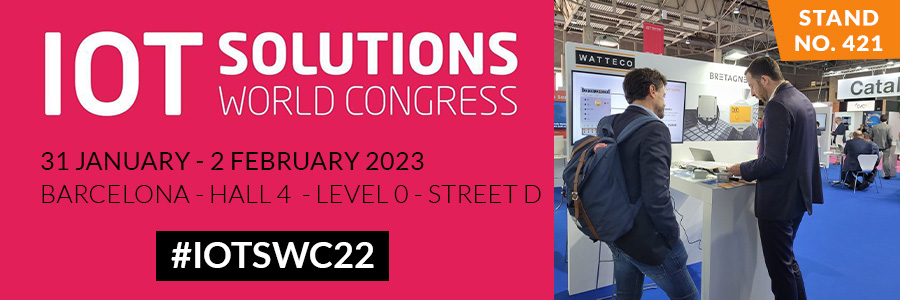
[EVENT] IOTSWC – From 31 January to 02 February 2023! https://test.watteco.com/event-iotswc-from-31-january-to-02-february-2023/ Tue, 24 Jan 2023 11:09:26 +0000 https://test.watteco.fr/?p=11352 The post [EVENT] IOTSWC – From 31 January to 02 February 2023! appeared first on WATTECO.

]]>

See you at IOTSWC from 31 January to 02 February 2023!

???? We will be present for the IOT Solutions World Congress in #barcelona from 31 January to 2 February. Meet us on stand #421.

???? A great opportunity to show you our new #lorawan #iot products.

???? Don't hesitate to make an appointment and visit us!
???? Don't hesitate to ask for a free invitation!

???? This year, you will have the chance to find WATTECO #iotdevices on The Things Network #ttn wall of fame!

The post [EVENT] IOTSWC – From 31 January to 02 February 2023! appeared first on WATTECO.

]]>
[EVENT] IBS Paris 8 and 9 November 2022! https://test.watteco.com/event-ibs-paris-8-and-9-november-2022/ Wed, 28 Sep 2022 07:45:42 +0000 https://test.watteco.fr/?p=10937 The post [EVENT] IBS Paris 8 and 9 November 2022! appeared first on WATTECO.

]]>
The post [EVENT] IBS Paris 8 and 9 November 2022! appeared first on WATTECO.

]]>